
 EN
EN




Candle Lover's Essential Terminology: A Complete Glossary from "Wax Pool" to "Memory Ring"
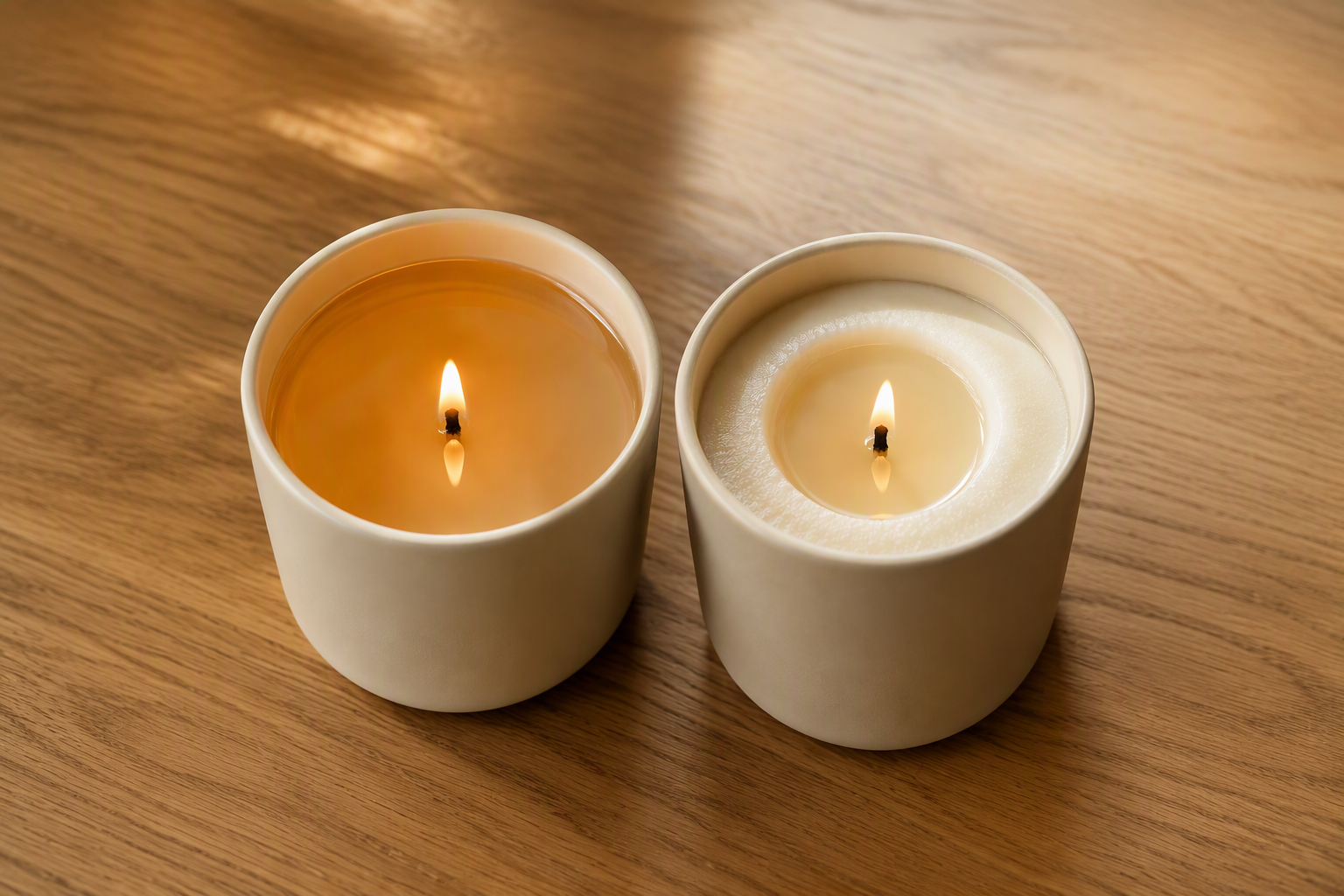
Every hobby has its own language. Knitters talk about "gauge" and "frogging." Coffee enthusiasts discuss "extraction" and "bloom." And candle lovers? We have our own vocabulary too—a rich lexicon of terms that describe everything from how wax behaves to how fragrance travels through a room.
If you have ever read a candle product description and felt slightly lost, or watched a candle care video and wondered what "tunneling" actually means, this glossary is for you. Understanding these terms will help you choose better candles, burn them more effectively, and appreciate the craftsmanship behind every flame.
At Tabo , we believe that informed customers are happier customers. Here is your complete guide to candle terminology—from A to Z.
Wax and Candle Construction Terms
Beeswax
A natural wax produced by honeybees to build their honeycomb. Beeswax has the highest melting point of any common candle wax (approximately 62–64°C / 144–147°F), which gives it the longest burn time and the cleanest flame. It releases a subtle, natural honey scent when burned. It is the traditional wax for church candles and is prized for its purity.
Coconut Wax
A soft, creamy wax derived from coconut oil. It is renewable, biodegradable, and burns very cleanly. Because it is soft, it is often blended with soy or other waxes to create container candles with excellent fragrance throw.
Cold Throw
The scent a candle releases when it is not burning. This is what you smell when you open a candle jar or sniff an unlit candle in a store. Cold throw is primarily determined by the fragrance oils sitting near the surface of the wax. A strong cold throw does not guarantee a strong hot throw.
Container Candle
A candle poured into a vessel—typically glass, ceramic, or metal—that is meant to be burned in its container. Container candles create their own melt pool and are the most common type of scented candle.
Curing Time
The period after a candle is poured and before it is burned, during which the fragrance oil binds with the wax. Curing typically takes 3 to 14 days, depending on the wax and fragrance. A well-cured candle has a stronger, more consistent scent throw than one burned immediately after pouring.
Fragrance Load
The percentage of fragrance oil in a candle, measured by weight. Most candles use between 6% and 12% fragrance load. Higher loads produce stronger scent but can affect burn quality. Beeswax has a limited fragrance load capacity, which is why it is often appreciated for its natural scent rather than added fragrance.
Frosting
A white, crystalline surface that sometimes develops on natural waxes like soy and coconut. Frosting is a natural characteristic of vegetable waxes and does not affect the candle's performance. It can be minimized by proper storage, but it is not a defect.
Hot Throw
The scent a candle releases while burning. This is the fragrance you experience when the candle is lit and the melt pool has formed. Hot throw is generally considered the true measure of a candle's fragrance performance. It is influenced by wax type, fragrance load, wick size, and room temperature.
Melt Pool
See Wax Pool.
Memory Ring
The ring of hardened wax that forms around the edge of a candle after its first burn. The candle "remembers" the size of the melt pool created during that initial burn. If the melt pool does not reach the edge of the container on the first burn, a memory ring forms, and subsequent burns will struggle to melt beyond it—leading to tunneling. This is why the first burn is so critical.
Paraffin Wax
The most common candle wax, derived from petroleum refining. Paraffin is inexpensive, holds fragrance and color well, and produces a strong hot throw. However, it burns faster than natural waxes, produces more soot, and can release volatile organic compounds (VOCs) when burned. It is not renewable.
Pillar Candle
A free-standing candle, usually cylindrical, that does not require a container. Pillar candles are made from harder waxes (such as beeswax or paraffin blends) so they can hold their shape without support.
Sinkhole
A depression or cavity that forms on the surface of a candle as it cools after pouring. Sinkholes occur because wax contracts as it solidifies. They are usually cosmetic and can be fixed with a second pour, but they do not affect how the candle burns.
Soy Wax
A natural wax made from hydrogenated soybean oil. Soy wax is renewable, biodegradable, and burns cleaner than paraffin. It has a lower melting point, which means it burns more slowly and lasts longer. It holds fragrance well, making it a popular choice for scented container candles.
Taper Candle
A tall, slender candle that narrows toward the top. Tapers are typically made from beeswax or paraffin and are designed to fit into candlesticks. They are often dripless when burned properly in a draft-free environment.
Tea Light
A small, short candle in a thin metal or plastic cup. Tea lights typically burn for 3–5 hours and are used for ambiance, warming, and decoration. They are often made from paraffin or soy wax.
Tunneling
The phenomenon where a candle burns straight down the center, leaving a thick wall of unmelted wax around the edges. Tunneling is caused by a memory ring formed during a too-short first burn, by a wick that is too small, or by burning in a drafty environment. It results in wasted wax and a shortened candle life.
Votive Candle
A small, cylindrical candle, typically about 2 inches in diameter. Votive candles are designed to be burned in a tight-fitting holder, which helps the wax pool evenly. They are often used in churches and for personal prayer.
Wax Bloom
A white, powdery film that sometimes appears on the surface of beeswax candles. Wax bloom is a natural occurrence—it is the migration of certain wax components to the surface. It is harmless and can be wiped away with a soft cloth. Some candle makers consider it a sign of pure, unadulterated beeswax.
Wax Pool (Melt Pool)
The pool of liquid wax that forms around the wick as a candle burns. The size of the wax pool determines how well the candle releases fragrance and how evenly it burns. A full wax pool extends to the edge of the container; a partial wax pool leads to tunneling.
Wet Spot
A discolored area that appears on the surface of a container candle where the wax has pulled away from the glass. Wet spots are caused by temperature changes during cooling and are purely cosmetic—they do not affect the candle's performance.
Wick and Burning Terms
Carbon Cap (Mushrooming)
A rounded buildup of carbon at the tip of a burning wick. Mushrooming occurs when the wick is too long or when the candle is burned in a drafty environment. It causes a larger, hotter flame and can produce soot. Trimming the wick to ¼ inch before each burn prevents mushrooming.
Draft
Any movement of air in the room where a candle is burning. Drafts cause the flame to flicker, burn unevenly, and produce soot. They are the enemy of a clean, even burn. Keep candles away from open windows, ceiling fans, and HVAC vents.
Dripless
A candle designed to burn without dripping wax down its sides. Dripless candles require a hard wax (such as beeswax or stearine), a properly sized wick, and a draft-free, perfectly vertical burning position.
Lead-Free Wick
A wick made without a lead core. Lead-core wicks were banned in the United States in 2003 due to health concerns. Today, most quality candles use cotton, paper, or zinc-core wicks. Lead-free is a standard, not a premium feature.
Mushrooming
See Carbon Cap.
Self-Trimming
A wick characteristic that causes the tip to curl into the flame and burn away slightly as it burns, reducing the need for frequent trimming. Cotton wicks are generally self-trimming to some degree. However, even self-trimming wicks should be trimmed before each burn for best performance.
Sooting
The release of black carbon particles from a candle flame. Sooting occurs when combustion is incomplete—usually due to a wick that is too long, a draft, or a candle with excessive fragrance or dye. A well-made candle burned properly should produce minimal soot.
Wick Dipper
A tool used to extinguish a candle by gently bending the wick into the wax pool. This method avoids the smoke and splatter produced by blowing out a candle. The wick is then straightened after the flame is out.
Wick Trimmer
A specialized tool for cutting candle wicks to the proper length (¼ inch). Wick trimmers have an angled head that catches the trimmed piece, preventing it from falling into the wax pool.
Fragrance and Scent Terms
Base Notes
The heaviest, slowest-evaporating fragrance notes in a candle. Base notes form the foundation of a fragrance and linger longest. Common base notes include cedarwood, sandalwood, vanilla, amber, and musk.
Essential Oils
Natural aromatic compounds extracted from plants. Essential oils are used in some candles for their therapeutic and aromatic properties. They are generally more expensive than synthetic fragrance oils and may have a more complex, variable scent profile.
Fragrance Oil
A synthetic or semi-synthetic blend of aroma chemicals used to scent candles. Fragrance oils offer consistency, variety, and strong scent throw. Quality fragrance oils are free from phthalates and other harmful additives.
Heart Notes (Middle Notes)
The core of a candle's fragrance, emerging after the top notes fade and lasting for the majority of the burn. Heart notes define the character of the fragrance. Common heart notes include rose, jasmine, lavender, cinnamon, and clove.
Phthalates
A group of chemicals sometimes used in fragrance oils to make scents last longer. Phthalates have been linked to potential health concerns and endocrine disruption. Many quality candle makers now offer phthalate-free options.
Scent Throw
The ability of a candle to release fragrance into the air. Scent throw is measured in terms of cold throw (unlit) and hot throw (lit). A candle with strong scent throw can fill a room with fragrance; a candle with weak scent throw is noticeable only when very close.
Top Notes
The lightest, most volatile fragrance notes—the first thing you smell when a candle is lit or opened. Top notes fade quickly, usually within 15–30 minutes. Common top notes include citrus, herbs, and light fruits.
Conclusion: Speak the Language of Candles
The world of candles is richer and more technical than most people realize. Knowing these terms—from wax pool to memory ring, from cold throw to mushrooming—helps you choose better candles, burn them more effectively, and appreciate the craftsmanship behind every product.
We are committed to transparency and education. Our candles are made from 100% pure beeswax, crafted with care, and designed to burn cleanly and beautifully. We believe that an informed customer is our best partner.
We hope this glossary serves as a useful reference as you explore the world of candles. Whether you are a casual burner or a devoted enthusiast, the more you understand, the more you will enjoy every flicker.