
 EN
EN



Middle East Church Customization Case Study: Precision Color Matching and Milestone Delivery That Keeps Every Project on Schedule
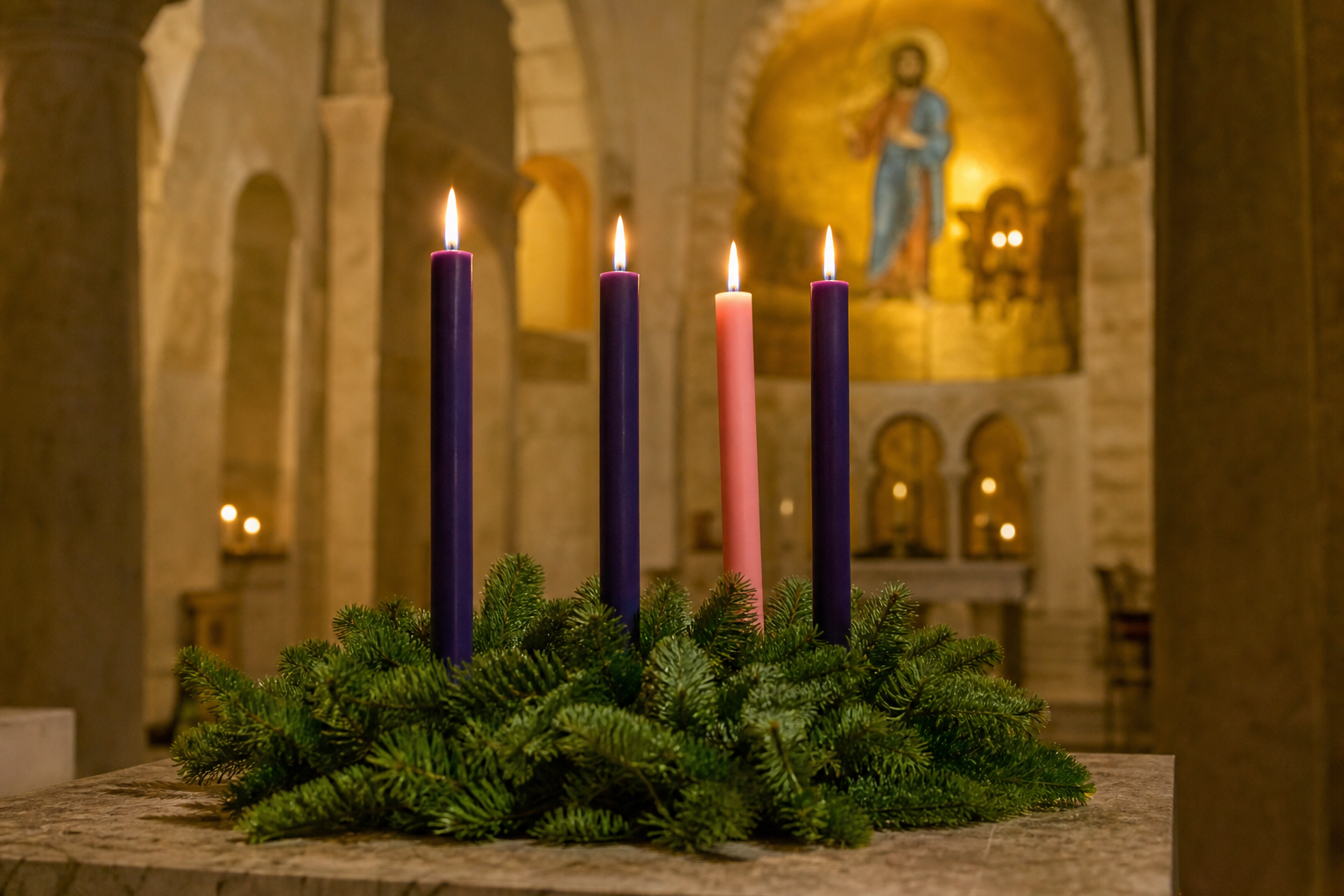
In the world of liturgical supplies, few things are as demanding as a custom candle project for a church in the Middle East. The requirements are exacting: specific colors that match liturgical vestments and architectural details, delivery timelines that align with major feast days and church calendar events, and a level of quality that befits the sanctity of the space.
When a church in the Middle East—let's call them Buyer A—approached us with a complex custom candle project, we knew that success would depend on two things above all else: precision color matching and milestone-based delivery. There would be no room for approximation. No room for delay. The candles had to be exactly right, and they had to arrive exactly on time.
This is the story of how we delivered on both fronts, and how our professional capabilities turned a challenging custom order into a seamless, trust-building partnership.
The Client: A Church with Exact Specifications
Buyer A is a prominent church community in the Middle East with a rich liturgical tradition. Their sanctuary features intricate iconography, hand-painted frescoes, and custom vestments in a distinctive palette of deep burgundy, royal blue, and antique gold. For an upcoming series of major feast days and special services, they needed a large quantity of beeswax candles that would harmonize perfectly with their existing aesthetic.
The request was specific:
Custom colors that matched their vestments and iconography exactly
Multiple sizes for different liturgical uses—altar candles, processional candles, and votive candles
Delivery in phases to align with the church calendar—some candles needed for an early feast day, others for a later celebration
Consistent quality across every batch, since the candles would be used over several months
Buyer A had previously worked with local suppliers, but the results had been inconsistent. Colors varied from batch to batch. Delivery dates slipped. The church needed a partner who could guarantee both precision and punctuality.
The Challenge: Precision and Timing Under Pressure
Custom candle projects for churches are never simple. But this project presented a unique combination of challenges:
The Color Matching Challenge
Liturgical colors are not arbitrary. In many church traditions, specific colors are prescribed for specific seasons and feasts. Getting the color wrong is not just an aesthetic issue—it can be a liturgical one. Buyer A needed candles in three specific shades:
Deep burgundy for feasts of martyrs and the Holy Cross
Royal blue for feasts of the Theotokos (Virgin Mary)
Antique gold for major celebrations and Paschal services
Each color had to match existing textiles and artwork that had been crafted decades earlier. There were no digital color codes to reference—only physical samples and photographs. And the colors had to be consistent across multiple production runs, ensuring that a candle made in September matched one made in November.
The Timing Challenge
The church calendar is not flexible. Feast days fall on fixed dates. Buyer A needed:
First delivery by early autumn for a major feast
Second delivery by late autumn for a series of special services
Third delivery by early winter for the Christmas season
Each delivery had to arrive with enough lead time for the church to inspect, store, and prepare the candles for use. A single missed milestone could disrupt months of planning.
The Quality Challenge
Church candles are not decorative objects. They are used in worship. They must burn cleanly, steadily, and consistently. They must be free from defects that could cause dripping, smoking, or uneven burning. For Buyer A, every candle was an offering—and it had to be worthy of its purpose.
Our Solution: A Two-Pronged Approach
To meet Buyer A's requirements, we implemented a two-pronged strategy: precision color matching and milestone-based production and delivery.
Part One: Precision Color Matching
Color is one of the most difficult things to get right in candle manufacturing. Wax behaves differently from fabric or paint. Dyes interact with wax chemistry in complex ways. And colors that look correct in the lab can appear different under church lighting.
We approached the challenge systematically:
Step 1: Sample Collection and Analysis. We requested physical samples of Buyer A's vestments and high-resolution photographs of the iconography. Our color specialists analyzed these samples using spectrophotometry, measuring the exact wavelengths of light reflected by each color. This gave us a scientific baseline to work from.
Step 2: Lab Dip Development. Our color lab created a series of "lab dips"—small wax samples in varying concentrations and combinations of dyes. We produced multiple iterations for each color, adjusting the formula until we achieved a match that was indistinguishable from the original samples.
Step 3: Sample Approval. We sent physical samples to Buyer A for approval. This was not a digital proof or a photograph—it was actual wax, in the actual color, that they could hold in their hands and compare directly to their vestments. Buyer A requested minor adjustments on two of the three colors. We revised the formulas and sent new samples within days.
Step 4: Batch Consistency Protocol. Once the colors were approved, we created a master batch formula for each shade. Every subsequent production run would be measured against this master batch. We also implemented a color verification step at multiple points in the production process, ensuring that every candle met the approved standard.
The result: Buyer A received candles that matched their specifications exactly—not approximately, not "close enough," but exactly. The burgundy, royal blue, and antique gold blended seamlessly with their existing liturgical textiles and artwork.
Part Two: Milestone-Based Production and Delivery
Meeting a single deadline is one thing. Meeting three separate deadlines over several months is another. We built the entire project around a milestone-based production schedule.
Step 1: Project Kickoff and Timeline Mapping. We began by mapping out every milestone in detail. When did Buyer A need each delivery? How long would production take? How long would shipping take? How much buffer time was needed for customs clearance and local transport? We worked backward from each deadline to create a production calendar that left nothing to chance.
Step 2: Phased Production. Rather than producing all the candles at once, we divided the project into three phases. Phase One focused on the candles needed for the early autumn feast. Phase Two covered the late autumn services. Phase Three addressed the Christmas season. This approach allowed us to focus resources on each phase without compromising quality, and it ensured that a delay in one phase would not cascade into the others.
Step 3: Proactive Communication. We did not wait for Buyer A to ask for updates. We provided proactive reports at every stage: production progress, quality control results, packing status, shipping updates, and customs clearance confirmation. Buyer A always knew exactly where their order stood.
Step 4: Buffer Time. We built buffer time into every phase. If a raw material shipment was delayed, if a production issue arose, if customs held the shipment for inspection—we had room to recover. Nothing went wrong, but the buffer gave both us and Buyer A peace of mind.
Step 5: Logistics Coordination. We coordinated with freight forwarders, customs brokers, and local delivery partners to ensure smooth transit from our factory to Buyer A's door. We chose shipping routes and carriers with proven reliability for the region, and we prepared all documentation in advance to prevent customs delays.
The result: Every milestone was met. The first delivery arrived with weeks to spare. The second and third deliveries followed the same pattern. Buyer A had their candles exactly when they needed them, with time to spare for preparation and inspection.
Quality Control: The Foundation of Trust
Color matching and delivery timing are essential. But neither matters if the candles themselves are not of the highest quality. Throughout the project, we maintained a rigorous quality control protocol:
Raw material inspection: Every batch of beeswax, every dye, every wick was inspected upon arrival. We rejected any material that did not meet our purity and performance standards.
In-line production checks: Our QC team monitored production in real time, checking wick centering, fill levels, and color consistency. Any deviation was corrected immediately.
Final burn testing: Before packing, we randomly selected candles from each batch for full burn tests. We verified even melt pool formation, clean burning, and absence of soot or smoke.
Packaging integrity: Each candle was individually wrapped and packed in moisture-resistant cartons to protect against the region's heat and humidity. Cartons were labeled with handling instructions and batch codes for traceability.
The Outcome: A Partnership Built on Precision and Reliability
Buyer A's project was completed successfully. All three deliveries arrived on time. All candles matched the approved colors exactly. All quality checks were passed.
The church used the candles throughout their feast day celebrations and special services. The candles burned beautifully—clean, steady, and consistent. The colors harmonized perfectly with the sanctuary's aesthetic, enhancing the beauty of the liturgical celebrations.
Buyer A's representative later told us: "We have worked with many suppliers over the years. None have matched your level of precision and reliability. You understood exactly what we needed, and you delivered exactly what you promised."
That trust has led to an ongoing partnership. Buyer A has since placed additional orders for other seasons and celebrations, confident that we will meet their specifications and their deadlines every time.
Why This Matters: Our Professional Capabilities
This case study illustrates what sets us apart as a supplier for churches and religious organizations:
Precision color matching. We do not guess at colors. We analyze, test, and refine until we achieve an exact match. Our color lab has the expertise and equipment to handle even the most demanding color requirements.
Milestone-based delivery. We understand that church calendars are not flexible. We build our production and shipping schedules around your deadlines, with buffer time to handle the unexpected.
Proactive communication. You will never wonder where your order is. We keep you informed at every stage, from raw material sourcing to final delivery.
Uncompromising quality. Every candle we produce is subject to rigorous quality control. We do not ship products we would not be proud to use ourselves.
Flexibility and customization. We work with churches of all sizes and traditions. Whether you need a small order for a single service or a large multi-phase project, we have the capacity and the expertise to deliver.
Conclusion: Your Project, Our Commitment
Custom candle projects for churches are not just business transactions. They are acts of service. They support worship, enhance sacred spaces, and accompany the faithful through the liturgical year.
At Tabo , we take that responsibility seriously. We are honored to serve churches around the world—from the Middle East to Europe to the Americas—with candles that meet the highest standards of quality, beauty, and precision.
If you have a custom candle project—whether it involves specific colors, specific sizes, specific delivery timelines, or all of the above—we invite you to contact us. Let us show you what precision and reliability truly mean.