 ×
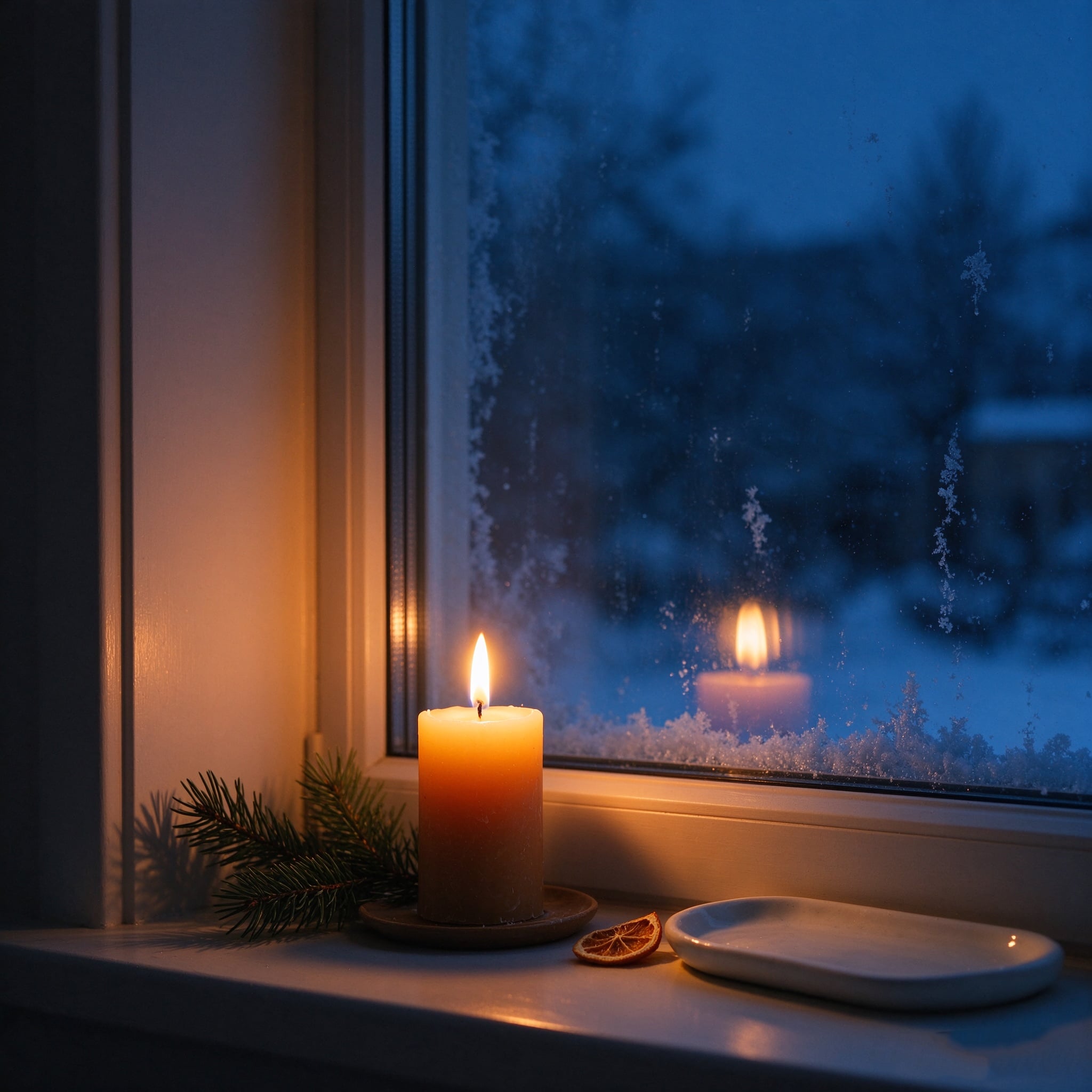
Every December, as the Northern Hemisphere tilts away from the sun, we arrive at the winter solstice—the shortest day and longest night of the year. For ancient cultures, this was a moment of both dread and hope: the sun’s light had reached its minimum, and from here, imperceptibly at first, it would begin to return. Fires were lit, evergreens were brought indoors, and candles were burned through the dark hours to coax the light back. Centuries later, we no longer need to fear the solstice. We have electric lights, central heating, and 24-hour grocery stores. And yet, the impulse to light a candle on the shortest day remains. Why? Because the winter solstice flame is not about survival anymore. It is about meaning, ritual, and the quiet power of a small, steady light in the middle of a long, dark night.
At Tabo, we think about this every year. Our candles are not just home fragrance products; they are small instruments of atmosphere, memory, and intentional living. And there is no better time to talk about why a candle still matters on the winter solstice than the weeks leading up to December 21st. So let’s explore the history, the science, and the simple human reasons why the shortest day still needs a candle—and why your home might benefit from one this season.
The winter solstice has been marked by candlelight and fire for thousands of years. In ancient Rome, the festival of Saturnalia—held around the solstice—involved candles, feasting, and gift-giving. In Scandinavia, before Christianity arrived, people lit fires to honor the Norse gods and to symbolize the sun’s rebirth. In China, the Dongzhi Festival celebrates the returning light with family gatherings and, in some regions, lanterns and candles. In Jewish tradition, Hanukkah, the Festival of Lights, often falls near the solstice and centers on a candle ritual that lasts eight nights. And in Christian tradition, Advent wreaths and Christmas candles echo the same theme: hope kindled in the dark.
What unites these traditions is not a single belief system but a shared human response to the turning of the year. The solstice is a threshold. It is the point at which darkness stops deepening and begins to recede. A candle is the perfect symbol for that threshold: it is small, fragile, and yet capable of holding back the night. When we light a candle on the winter solstice, we are participating in a ritual that is older than any written language. We are saying, with fire, that we trust the light to return.
You might argue that a candle is unnecessary. After all, you can flip a switch and flood a room with light. But the science of light and human psychology tells a different story. Candlelight is not simply dimmer than electric light; it is qualitatively different. A candle flame flickers at a low frequency, around 1 to 10 hertz, and that gentle movement is soothing to the human nervous system. Studies on ambient lighting have shown that warm, low-intensity light—especially light with a color temperature below 2000 Kelvin, like a candle flame—can promote relaxation, lower cortisol levels, and prepare the body for sleep. In contrast, the bright, blue-rich light of screens and overhead fixtures can suppress melatonin and keep us alert.
There is also the matter of ritual. Lighting a candle is a deliberate act. It takes a moment: you strike a match, you touch the wick, you watch the flame catch. That small pause creates a psychological boundary between the ordinary and the intentional. On the winter solstice, when the day is short and the night is long, that pause can be a gift. It gives you permission to stop, to breathe, and to acknowledge the season. A candle does not just illuminate a room; it changes the quality of the room. It makes a space feel smaller, warmer, and more human.
For us at Tabo, the winter solstice is not just a date on the calendar. It is a design prompt. What scent should accompany the longest night? What vessel should hold the flame? What message should the label carry? We have always believed that a candle is a complete sensory experience: the visual warmth of the flame, the tactile pleasure of a well-made vessel, and the olfactory story told by the scent.
This year, our winter solstice collection leans into the themes of the season: darkness and light, stillness and renewal. We have chosen notes that evoke the natural world in winter—cedarwood and pine, smoky birch, a hint of orange peel and clove. These are not sweet, summery fragrances. They are grounded, resinous, and quietly complex. They smell like a walk in the woods after the leaves have fallen, like a fire in the hearth, like the inside of an old library. They are scents that reward attention, and they are designed to be burned slowly, over the long evenings when the sun sets before dinner and the night stretches out ahead of you.
Our vessels this season are made of amber glass and matte ceramic, materials that feel warm to the touch and that glow when the candle is lit. We have also introduced a limited-edition solstice tin, small enough to sit on a windowsill or a bedside table, so that the flame can travel with you from room to room. These are not just products; they are invitations to create a ritual. Light the candle at sunset. Watch the flame for a minute. Let the day end.
So we return to the question in our title. The winter solstice does not need a candle in any practical sense. We have light switches and streetlamps. But the shortest day still needs a candle because we still need ritual, and we still need symbols. We need a way to mark the turning of the year that is not just a date on a calendar but a felt experience. A candle gives us that. It is a small, controlled fire that we hold in our hands, a reminder that even the longest night has a center, and that center can be warm.
There is also a communal dimension. When you light a candle on the winter solstice, you are joining a tradition that stretches back thousands of years and spans every continent. You are doing what people have done in caves and castles, in temples and tenements, in times of plenty and times of scarcity. You are saying that light matters, that warmth matters, and that the return of the sun is worth celebrating. In a world that often feels fragmented and fast, that is no small thing. A candle is a slow technology. It asks you to be present. And on the shortest day of the year, presence is exactly what we need.
If you are new to the idea of a winter solstice candle ritual, here are a few simple ways to begin. First, choose a candle with a scent that feels grounding to you—something woody, resinous, or spicy. Avoid bright floral or citrus notes, which can feel out of step with the season. Second, designate a spot for your candle. It could be a dining table, a mantelpiece, a windowsill, or a bath ledge. The key is to make it a place you will see and pass by often. Third, light your candle at sunset on the solstice. If you can, turn off the electric lights in that room and let the candle be the only source of illumination for a few minutes. Sit with it. Watch the flame. Breathe. You might be surprised by how quickly the room feels different.
Finally, consider making the solstice candle a yearly tradition. Buy a candle specifically for this night, and burn it only on the solstice. Over time, the scent will become associated with the season, and lighting it will feel like coming home. This is how rituals are built: not through grand gestures, but through repetition and attention.
The winter solstice is a reminder that darkness is not permanent. It is a turning point, a hinge in the year. And a candle is the perfect companion for that hinge: small enough to be humble, bright enough to matter. This December, as the sun sets early and the night stretches long, we invite you to light a flame. Not because you have to. Not because it is practical. But because the shortest day still needs a candle—and so do we.
Explore our winter solstice collection at https://www.tabocandle.com and find the candle that will light your longest night.
Waiting for our long-terms and friendly cooperation.

 EN


