 ×
×
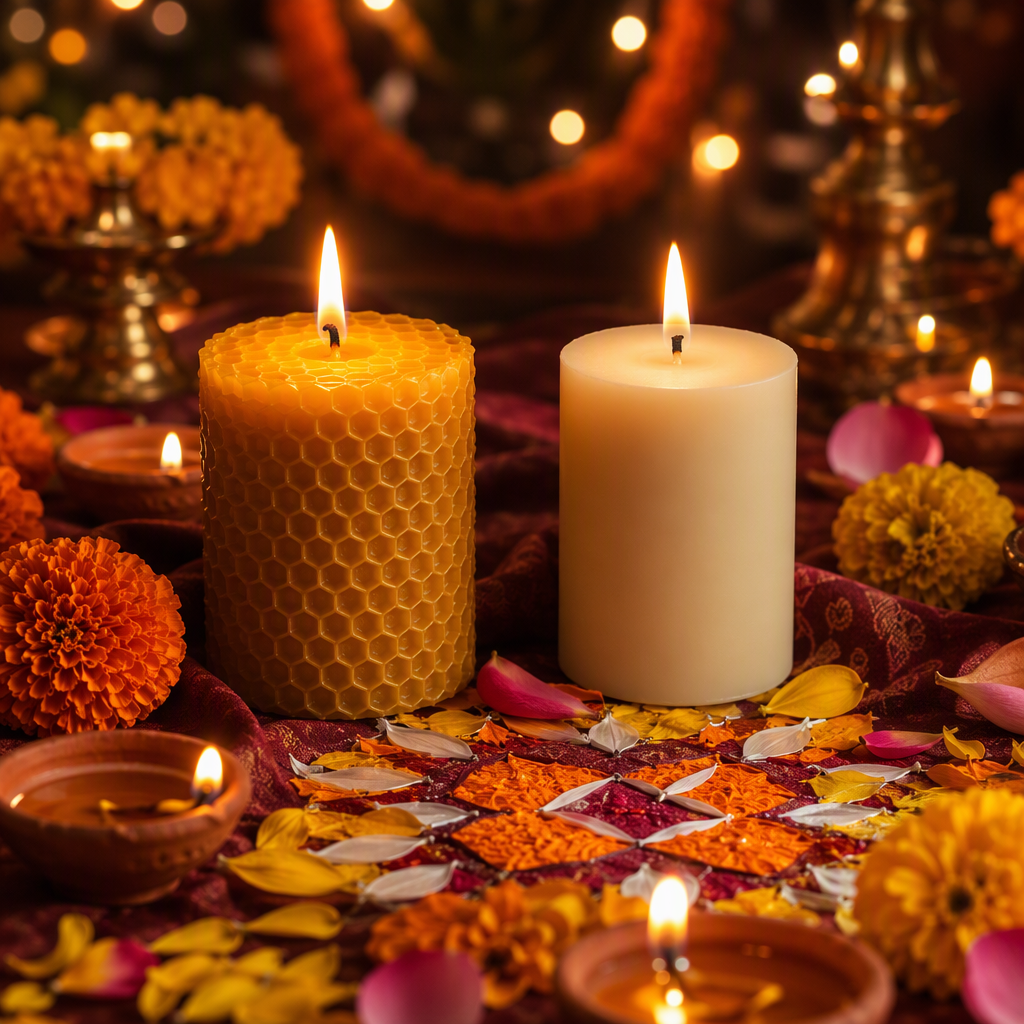
Every autumn, across India and throughout the worldwide Indian diaspora, a quiet transformation takes place. Windows are thrown open and scrubbed clean. Doorways are swept and decorated with rangoli patterns of colored powder and flower petals. And as dusk falls, rows upon rows of small flames flicker into life—on windowsills, along balconies, on temple altars, and in the hands of children.
This is Diwali, the Festival of Lights. It is a celebration of the victory of light over darkness, knowledge over ignorance, and good over evil. It marks the return of Lord Rama to Ayodhya after fourteen years of exile, and it honors Lakshmi, goddess of prosperity and abundance, who is believed to visit homes that are bright, clean, and welcoming.
But beneath the beauty of the festival lies a question that few people stop to ask: what is actually burning in those thousands of small flames?
At Tabo , we believe the answer matters. A festival built entirely around light deserves a light that is as pure as its intention. In this guide, we explore the ancient tradition of the diya, the modern problem with conventional candle wax, and why natural beeswax and soy wax candles have become the preferred choice for families who want their Diwali to be both beautiful and clean.
Long before the wax candle existed in its modern form, Indian households lit diyas—small clay lamps filled with oil and fitted with a cotton wick. The fuel was traditionally ghee (clarified butter) or sesame oil, both of which were considered sacred and pure.
The diya is not merely decorative. In Hindu tradition, it carries deep meaning:
The clay vessel represents the human body—humble, earth-made, and temporary
The oil or ghee represents the mind and its accumulated tendencies
The cotton wick represents the ego or the sense of "I"
The flame represents the soul, or the divine light of consciousness
When the wick burns, the ego is consumed. When the flame rises, the soul shines. Lighting a diya is therefore not just an act of decoration—it is a small act of inner offering.
This is why the quality and purity of what you burn has always mattered in the tradition. Ghee and sesame oil were chosen not only because they were available, but because they were clean, natural, and considered fit for offering. The flame was meant to be sattvic—pure, gentle, and clarifying.
Modern beeswax and soy wax candles, when made well, carry that same intention forward into a form that is easier to use, longer-burning, and safer in contemporary homes.
Walk into any discount store in October or November, and you will find shelves stacked with brightly colored, heavily scented candles marketed for the festival season. Many of them are made from paraffin wax—a byproduct of petroleum refining.
Paraffin is inexpensive and holds fragrance and color extremely well. It is also the reason why so many inexpensive candles produce black soot on walls, ceilings, and temple shelves, and why some people develop headaches, coughing, or irritated eyes during long evenings of candle burning.
When paraffin burns, it can release volatile organic compounds (VOCs), including trace amounts of benzene and toluene. In a well-ventilated room, this is usually a minor concern. But during Diwali, families often burn dozens of candles simultaneously in enclosed spaces, for hours at a time, with windows closed against the evening chill.
This is where the choice of wax becomes more than an aesthetic preference. It becomes a matter of what you are inviting into the air your family breathes during the most sacred week of the year.
Beeswax is the oldest candle wax in human history, and it remains the most prized.
Beeswax is produced by honeybees to build the honeycomb. It is harvested as a byproduct of honey production—specifically from the cappings, the thin wax layer bees use to seal ripened honey cells. Ethical harvesting does not harm the colony and allows the bees to reuse the remaining comb.
It burns long. Beeswax has the highest melting point of any common candle wax—approximately 62–64°C (144–147°F). This means it burns slowly and steadily, giving you many more hours of light per candle than paraffin of the same size. For a festival where lamps are meant to burn through the evening and into the night, this is a genuine advantage.
It burns clean. Pure beeswax produces virtually no soot when burned with a properly trimmed wick. Your temple shelf, your windowsills, and your walls stay clean.
It carries a natural fragrance. Beeswax releases a subtle, warm aroma of honey and nectar as it burns. It does not compete with your incense—it complements it. Many families find this gentle sweetness reminiscent of the ghee lamps of their childhood.
It glows like ghee. The flame of a beeswax candle is warm and golden—closer in color to a traditional oil lamp than the colder, harsher flame of paraffin.
It is a renewable, living material. Beeswax comes from bees, from flowers, from the natural world. In a festival that honors abundance and the generosity of the earth, this feels fitting.
Beeswax has one significant limitation: it does not hold added fragrance oils well. If you want a strongly scented candle—say, a jasmine or sandalwood candle that fills the room—beeswax will give you only a subtle version of that scent. It is best appreciated for its own natural aroma and for the quality of its flame.
It is also more expensive, and it is not vegan, since it is produced by bees.
Soy wax emerged in the 1990s as a plant-based alternative to paraffin, and it has become one of the most popular natural candle waxes in the world.
Soy wax is made from hydrogenated soybean oil. It is renewable, biodegradable, and derived from an agricultural crop rather than from fossil fuels.
It burns clean. Soy wax produces significantly less soot than paraffin, which means cleaner air and cleaner surfaces.
It burns slowly. Because soy wax has a lower melting point than paraffin, it burns more slowly, giving you a longer burn time per ounce.
It holds fragrance well. This is soy's greatest advantage over beeswax. If you want a Diwali candle scented with sandalwood, rose, or cardamom, soy wax will carry that fragrance much more effectively.
It is vegan and plant-based. For families who prefer to avoid animal-derived products, soy wax is an excellent choice.
It is easy to clean. Spilled soy wax can be removed with warm soapy water, unlike paraffin, which often requires solvents.
Soy wax is softer than beeswax and is best suited to container candles rather than free-standing pillars. It can also develop a white crystalline surface called "frosting" over time—a natural characteristic that does not affect performance but may look less uniform.
|
Feature |
Beeswax |
Soy Wax |
Paraffin |
|
Source |
Honeybee cappings (renewable) |
Soybean oil (renewable) |
Petroleum byproduct (non-renewable) |
|
Burn time |
Longest |
Long |
Shortest |
|
Soot |
Very low |
Low |
High |
|
Natural scent |
Honey and nectar |
Neutral |
Petroleum odor when unscented |
|
Added fragrance hold |
Limited |
Excellent |
Excellent |
|
Flame color |
Warm gold |
Warm gold |
Bright white-yellow |
|
Vegan |
No |
Yes |
Yes |
|
Best use |
Diyas, pillars, altar candles |
Container candles, scented candles |
Budget candles |
If you want the closest thing to a traditional ghee lamp in candle form, choose beeswax. If you want a clean-burning, beautifully scented candle for the living room or the dining table, choose soy.
Many families use both: beeswax for the altar and the doorway, soy for the entertaining spaces.
Place beeswax pillar candles or tea lights on the home altar, flanking the images of Lakshmi and Ganesha. Their warm golden flame resembles the traditional ghee diya, and their honey scent blends beautifully with incense.
Rangoli at the entrance is traditional, and small candles placed around the design extend its beauty into the evening. Use tea lights in low, heat-safe holders rather than open flames on the floor. If you have children or pets, consider placing the lights in glass holders or opting for battery-operated tea lights within the rangoli, and reserving real flames for higher surfaces.
A row of small candles along the windowsill is one of the most iconic images of Diwali. Soy wax tea lights work well here—they are inexpensive enough to use in quantity, and they burn cleanly. Place each one on a small dish to protect the paint and sill from heat.
For the Diwali feast, use unscented or lightly scented soy wax candles. Strong fragrance can interfere with the aroma of food—and Diwali cooking deserves to be the star of the table.
If you are choosing scented candles, these notes align beautifully with the Diwali mood:
|
Scent |
Association |
|
Sandalwood |
Temple, meditation, sacred calm |
|
Rose |
Devotion, beauty, offering |
|
Jasmine |
Evening, fragrance, celebration |
|
Cardamom |
Warmth, hospitality, chai |
|
Frankincense |
Ritual, purification, prayer |
|
Champa |
Traditional Indian floral |
|
Vanilla and amber |
Warmth, abundance, comfort |
Avoid sharp citrus and heavy synthetic "holiday spice" blends—they tend to clash with incense and Indian sweets.
Diwali involves more open flames in a single evening than most households manage in an entire year. A few habits protect what matters most:
Trim wicks to ¼ inch before each lighting. A long wick produces a large, smoky flame and burns wax too quickly.
Never leave candles burning unattended. Extinguish them before sleeping or leaving the house.
Keep flames away from rangoli powder, dried flowers, fabric, and decorations. These materials ignite easily.
Place candles on heat-resistant surfaces. A metal tray, ceramic dish, or stone slab protects your shelves and tables.
Keep candles out of reach of children and pets. Curious hands and wagging tails are the leading cause of Diwali candle accidents.
Limit each burn session to three to four hours. This prevents containers from overheating and cracks from forming.
Ventilate. Even clean-burning candles consume oxygen. Open a window briefly between rounds of lighting.
If you have small children or pets, consider using flameless LED diyas for the floor-level rangoli and reserving real candles for elevated surfaces. The intention of the festival is light, not risk.
Diwali is a season of giving. Sweets are exchanged, homes are visited, and gifts are offered to family, friends, neighbors, and colleagues.
A beautifully made beeswax or soy wax candle is a gift that fits the festival perfectly. It is:
Useful — everyone can find a place for a candle
Beautiful — it looks elegant before it is ever lit
Consumable — it does not add clutter, only light
Meaningful — it carries the symbolism of the festival itself
A simple set of three beeswax tea lights in a small box with a handwritten note—"May your home always be filled with light"—is a thoughtful and affordable offering. For a more substantial gift, a large beeswax pillar paired with a brass holder makes an elegant presentation.
Avoid heavily perfumed candles as gifts unless you know the recipient's preferences. A subtle honey scent from beeswax or a light sandalwood soy candle is far safer than something aggressively sweet.
Diwali is a covenant of light. The rows of lamps are not merely decoration—they are an offering, a prayer, and a welcome. They say to Lakshmi: this home is bright, this home is clean, this home is ready for your blessings.
If that is the intention, then the material of the light matters.
Beeswax and soy wax candles burn cleaner than paraffin. They last longer, look warmer, and release fewer of the compounds that make indoor air heavy. They allow the flame to do what the tradition intended: to illuminate, to purify, and to uplift.
At Tabo, we craft our candles with this in mind. Our beeswax and soy wax collections are made without paraffin, without lead wicks, and without synthetic dyes—because a festival that honors purity deserves a light that honors it too.
This Diwali, may your home be filled with rows of small, steady flames. May the air stay clear, the light stay warm, and the blessings stay near.
Shubh Deepavali.
Waiting for our long-terms and friendly cooperation.

 EN
EN


